Recent Posts
Best Rice Varieties for African Markets
February 23, 2026
How Indian Rice Meets Global Quality Standards
February 23, 2026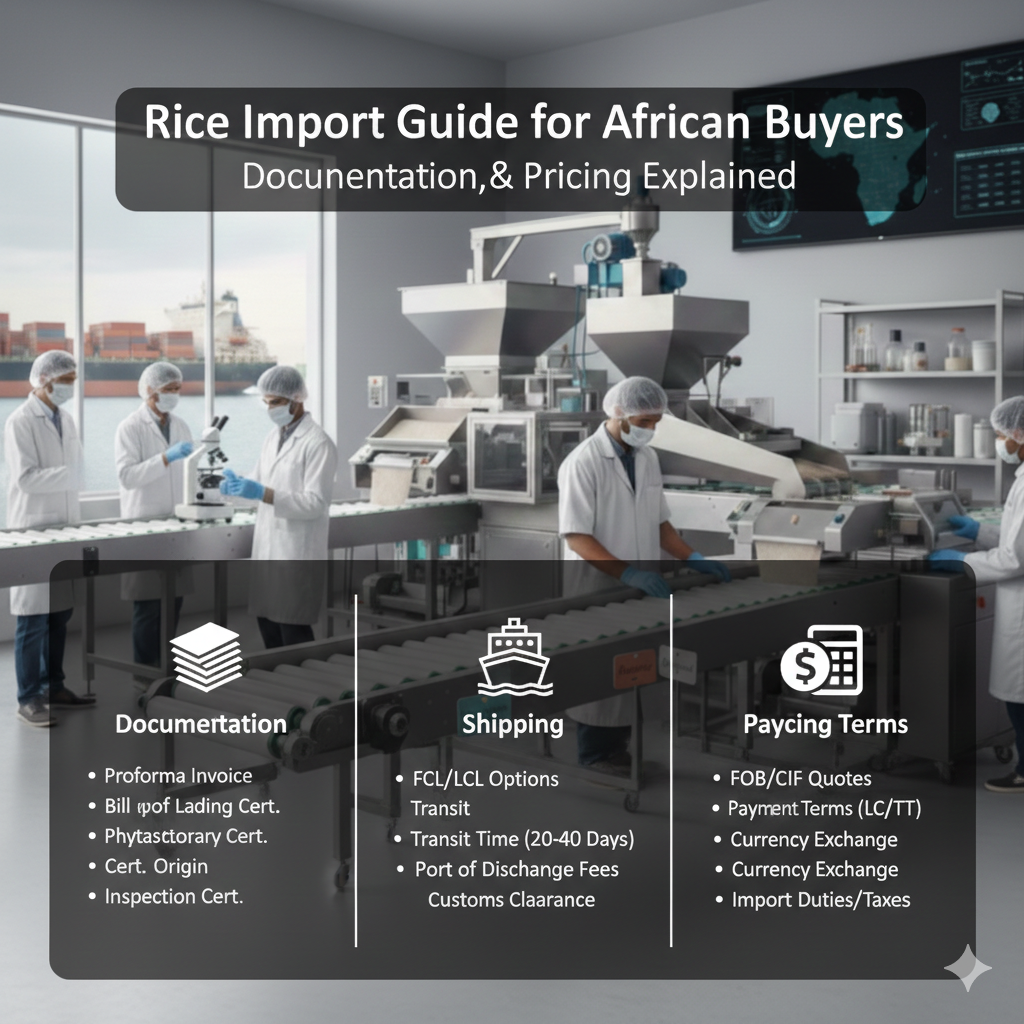
Rice Import Guide for African Buyers: Documentation, Shipping & Pricing Explained
🌍 Rice Import Guide for African Buyers: Documentation, Shipping & Pricing Explained
Importing rice from India can be a highly profitable and reliable business when handled with the right knowledge and export partner. This guide explains the complete process—from paperwork to delivery—helping importers make informed decisions and avoid delays.
At Limra Trading Co., we support buyers across Zambia, Tanzania, Zimbabwe, and South Africa with a smooth, transparent import process from India to destination ports.
📄 1. Essential Documents Required for Rice Import
To ensure successful customs clearance, the following documents are typically required:
Export Documents Provided by Supplier
Commercial Invoice – Confirms product value and transaction details
Packing List – Specifies number of bags, weight, and packaging
Bill of Lading (B/L) – Shipping document issued by carrier
Certificate of Origin – Confirms goods are sourced from India
Phytosanitary Certificate – Verifies rice is pest-free and safe
Fumigation Certificate – Ensures treatment against insects
Quality & Weight Certificate – Confirms agreed specifications
Documents Required by Importer
Import license (if applicable in your country)
Tax registration / importer registration
Customs declaration forms
Port and clearance charges documentation
Having complete paperwork prevents delays and additional inspection costs.
🚢 2. Shipping Process: From Indian Mill to African Port
The rice export journey follows a structured logistics chain:
Step-by-Step Shipping Flow
Processing & Packaging – Rice prepared according to buyer specifications
Container Loading – Usually 20ft or 40ft containers
Port Dispatch – Sealed containers shipped from Indian ports
Ocean Freight Transit – Average transit time: 18–28 days
Arrival & Customs Clearance – Documentation submitted to authorities
Local Delivery – Transported to warehouse or distribution center
Container Capacity (Typical)
| Container Type | Approx. Quantity |
|---|---|
| 20ft Container | 24–26 MT |
| 40ft Container | 26–28 MT (depending on packing) |
Proper loading ensures minimal grain damage and maximum freight efficiency.
💰 3. Understanding Rice Import Pricing
Rice pricing depends on multiple commercial and logistical factors.
Key Price Components
Rice variety (Basmati vs Non-Basmati)
Packaging type (retail vs bulk)
Order volume (larger orders reduce cost per ton)
Freight charges and shipping line rates
Destination port handling fees
Seasonal crop availability
Currency exchange fluctuations
Common Trade Terms (Incoterms)
FOB (Free on Board): Buyer pays freight from Indian port
CFR (Cost & Freight): Seller includes shipping cost
CIF (Cost, Insurance & Freight): Seller covers freight + insurance
Most African importers prefer CIF pricing for easier cost planning.
📦 4. Choosing the Right Packaging for Your Market
Packaging must suit both logistics and retail environment.
Available Options:
25kg / 50kg woven bags for wholesale distribution
5kg / 10kg branded bags for supermarkets
BOPP laminated moisture-proof packaging
Private label printing for local branding
Strong packaging is essential to withstand long sea journeys and warm climates.
⏱️ 5. Typical Import Timeline
| Stage | Estimated Duration |
|---|---|
| Order Confirmation | 2–3 Days |
| Processing & Packing | 5–7 Days |
| Container Loading | 2 Days |
| Sea Transit | 18–28 Days |
| Customs Clearance | 3–5 Days |
Total Lead Time: ~30–40 Days
Planning inventory based on this cycle ensures uninterrupted supply.
✅ 6. Tips for First-Time Rice Importers
To avoid common mistakes:
✔ Request samples before confirming bulk orders
✔ Verify grain specifications in contract
✔ Confirm packaging durability
✔ Work with exporters experienced in African markets
✔ Plan clearance logistics before shipment arrival
✔ Choose varieties aligned with local consumption habits
A reliable exporter acts as your supply-chain partner—not just a seller.
🤝 Why Work with an Experienced Export Partner?
Successful rice importing depends on:
Accurate documentation
Transparent pricing
Timely shipment coordination
Consistent quality across containers
Understanding of African trade requirements
With the right partner, importers can focus on distribution and sales while the export process runs smoothly.
📞 Get Expert Assistance with Your Rice Imports
Limra Trading Co. provides complete export support—from variety selection to shipping coordination—ensuring a hassle-free importing experience.
🌐 Website: limratrading.com
📞 Contact: +260774227697
👤 Contact Person: Sharik Mohammad